Depot Charging vs Public Charging: Which Is Better for EV Fleets?
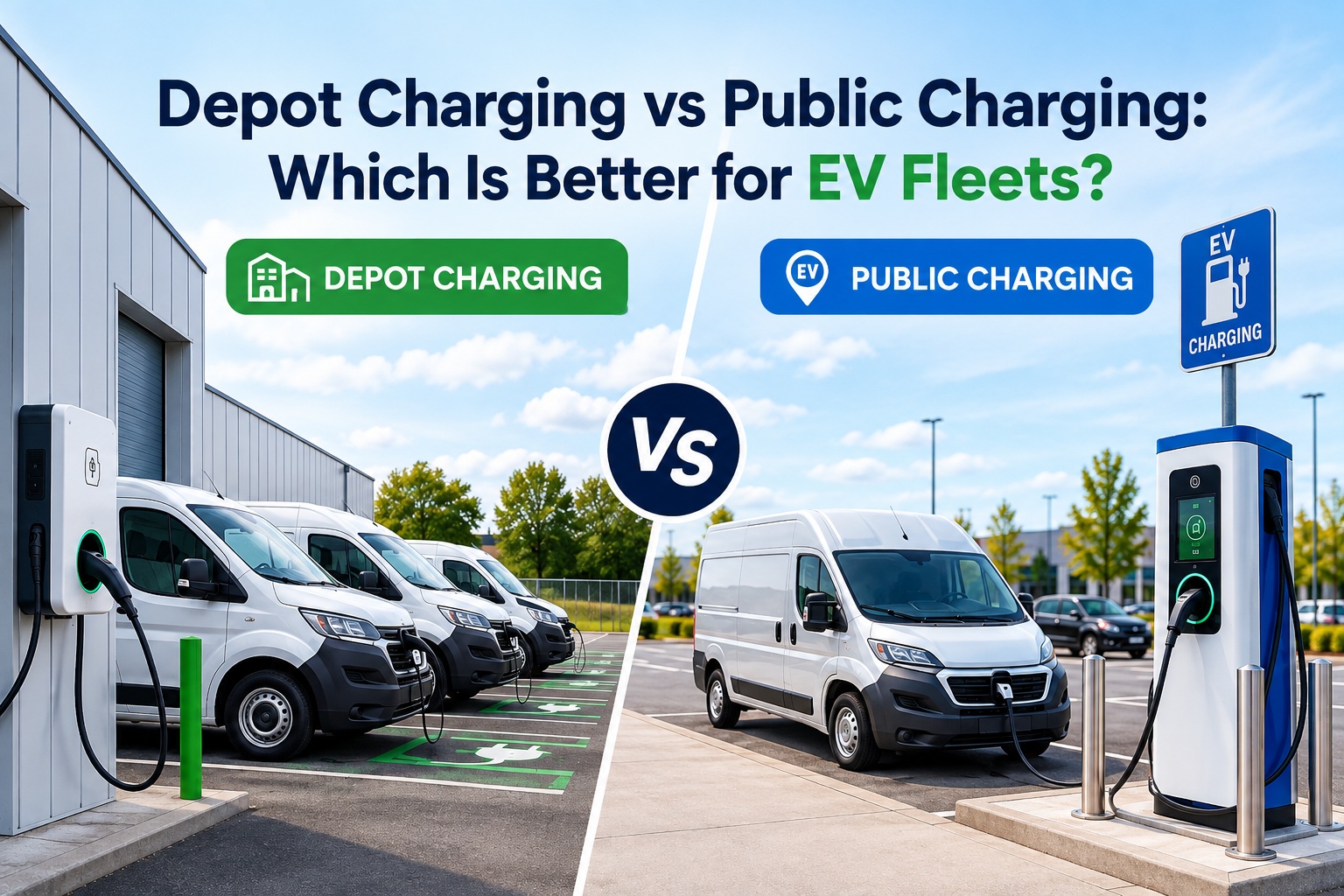
Depot charging vs public charging is one of the most important decisions businesses face when moving from petrol and diesel vehicles to electric vehicles. The right charging model can influence daily operations, charging costs, vehicle availability, driver convenience and the long-term value of your EV infrastructure. For a small fleet, relying on a public charging network may appear to be the simplest option. However, as the number of electric vehicles grows, dedicated depot charging can provide greater control over when and where vehicles charge
That does not mean public charging should be ignored. In many cases, the most effective fleet charging strategy combines private depot charging with access to public chargers for longer journeys and operational flexibility. EV-Hub (Wholesale) Limited supports the wider transition to zero-emission transport by supplying EV charging products, accessories and installation essentials to contractors across the UK. Our installer-focused approach means we understand that every charging project needs to consider the practical requirements of the site, vehicles and users.
What Is Depot Charging?
Depot charging means charging electric fleet vehicles at a dedicated private location, such as a company depot, workplace car park or logistics site. The main benefit is control. Vehicles can return to the depot, connect to chargers and charge while parked, helping ensure they are ready for the next shift.
The required equipment depends on vehicle type, battery capacity, mileage, parking spaces and electrical capacity. EV-Hub supplies EV chargers, charging leads, groundwork solutions and accessories from leading brands. Businesses should also consider the complete system, including mounting, cabling, protection, electrical supply and future expansion requirements.
What Is Public Charging?
Public charging allows fleet drivers to charge electric vehicles at publicly available charge points instead of relying only on depot chargers. The UK charging network continues to grow, giving businesses more options for charging vehicles away from base. Public charging is particularly useful for delivery, service and long-distance vehicles that spend much of their working day travelling. Drivers can charge during planned stops or when additional range is required.
Depot Charging vs Public Charging: The Key Differences
Both approaches have a role in fleet electrification, but they provide different levels of control, convenience and flexibility.
| Factor | Depot Charging | Public Charging |
| Location | Private business premises | Public locations |
| Control | High | Lower |
| Daily fleet operations | Easy to plan around | Dependent on network availability |
| Charging costs | Easier to monitor and manage | Can vary by operator and location |
| Driver convenience | Vehicles can charge while parked | Drivers may need to stop specifically to charge |
| Initial investment | Requires site infrastructure | Limited private infrastructure investment |
| Long-distance journeys | Limited without additional charging | Highly useful |
| Scalability | Can be planned for future fleet growth | Dependent on external network coverage |
| Operational visibility | Easier to manage internally | Dependent on external charging network |
| Best use | Regular depot-based fleets | En-route and longer-distance charging |
The best solution is therefore not always an either-or decision. A well-designed fleet charging strategy can use depot charging as the primary charging method and public charging as a backup or en-route solution.
The Benefits of Depot Charging for EV Fleets
Depot charging allows EV fleets to recharge vehicles at a central location, making charging easier to manage and schedule. It can also improve fleet efficiency by ensuring vehicles are ready for their next route.
Greater Control Over Charging
Control is one of the strongest arguments for depot charging. Fleet managers can establish charging procedures around vehicle movements. Vehicles that return to base every evening can be connected to chargers after completing their daily routes.
This makes charging part of the normal fleet process rather than an additional task that drivers need to organize during the working day. For fleets with predictable schedules, this can simplify operations significantly.
Better Visibility of Charging Costs
Charging costs are an important consideration when planning an EV fleet. With depot charging, businesses have greater visibility over the electricity used by their own charging infrastructure. This can make it easier to monitor energy consumption and understand the operating costs associated with charging.
Public charging, meanwhile, can involve different tariffs and charging providers. The final cost can therefore depend on where and when a driver charges.
Reduced Dependence on External Networks
A fleet that relies entirely on public charging is dependent on the availability and location of third-party charge points. Depot charging reduces this dependency. If a vehicle completes its daily route and returns to the depot, the operator has a dedicated location where charging can take place. This can be particularly valuable for businesses with vehicles that follow consistent routes and return to base regularly.
Easier Integration With Fleet Operations
Depot charging can be designed around the physical layout of a business. Charging points can be positioned near fleet parking spaces. EV posts, mounting equipment and suitable accessories can then be selected to create a practical charging area.
EV-Hub’s range includes EV charging posts and mounting solutions designed to support different charger installations. This is important because the physical infrastructure around the charger can be just as important as the charger itself.
The Benefits of Public Charging for EV Fleets
Excellent for Long-Distance Journeys
Public charging becomes particularly valuable when vehicles travel beyond their normal operating range. A vehicle that cannot return to the depot before needing another charge needs access to en-route infrastructure.
Public rapid charging can help reduce the amount of time required for charging during longer journeys, depending on the vehicle and charger capabilities.
Lower Upfront Infrastructure Requirements
One potential advantage of public charging is that the business does not need to install a complete charging site for every vehicle. Instead, the operator can use existing charging infrastructure.
However, this needs to be considered alongside ongoing charging costs and the operational time involved in reaching and using public chargers. A lower upfront infrastructure requirement does not necessarily mean lower total cost over the life of the fleet.
Useful for Distributed Fleets
Not every business operates from one central depot. A fleet may have vehicles working across different regions or employees taking vehicles home overnight. In these circumstances, a single depot charging location may not meet every charging requirement. Public charging can provide the additional flexibility needed to support a more distributed operation.
What Type of Fleet Benefits Most From Depot Charging?
Depot charging is particularly attractive for fleets with predictable operating patterns.
This can include:
- Company cars that return to base
- Delivery fleets
- Local service vehicles
- Commercial vans
- Workplace fleets
- Municipal vehicles
- Vehicles operating from a central depot
The more consistently vehicles return to the same location, the easier it becomes to build charging into the normal daily routine.
What Type of Fleet Benefits Most From Public Charging?
Public charging is particularly useful for fleets with less predictable routes.
It can support:
- Long-distance business travel
- Regional service fleets
- Vehicles working across multiple areas
- High-mileage vehicles
- Fleets without suitable private parking
- Vehicles that cannot reliably return to a depot
In these situations, access to a reliable charging network can be an important part of keeping vehicles operational.
The Role of Professional Installation
Charging equipment is only one part of an effective EV infrastructure project. Installation quality, electrical safety, cable management, mounting and site layout all matter. EV-Hub was created by experienced electrical installers with wholesale knowledge and experience. The company provides products and installation essentials for UK contractors and supports customers through a Midlands-based trade shop and nationwide logistics network.
EV-Hub also recommends using qualified installers for EV charger installations to help ensure safety and compliance with applicable UK electrical requirements.
Government Support and Fleet Charging
UK businesses should also check the latest government support before planning a charging project. The Workplace Charging Scheme currently provides eligible organizations with support towards workplace charge point installation, with the maximum grant rate increased to £500 per socket from 1 April 2026.However, grant eligibility and scheme conditions can change.
Businesses should always check the latest official guidance before making financial assumptions about a project. This is another reason strategic planning matters. A fleet charging project should remain commercially sensible even when grants or incentives are not available.
Conclusion: Which Is Better for EV Fleets?
Depot charging vs public charging is not about choosing one option. For fleets that return to a central location, depot charging offers greater control, predictable charging and better visibility over charging costs. Public charging adds flexibility for long-distance journeys, unexpected routes and vehicles operating away from base.
A well-planned charging setup can support future expansion and help businesses transition to electric transport with greater confidence. Plan your EV infrastructure around vehicle usage, routes, parking, electrical capacity and future growth. Explore the available EV charging solutions or get in touch to discuss your fleet charging requirements.
A balanced approach can often deliver the best results. Depot chargers can handle overnight or scheduled charging, while public charge points provide useful backup when vehicles travel further or operate away from their usual base. Contact EV-Hub (Wholesale) Limited to discuss your charging requirements and explore suitable EV charging solutions for your business.
Frequently Asked Questions
1. Is depot charging cheaper than public charging?
2. Is public charging better for long-distance EV fleets?
3. Should an EV fleet use both depot and public charging?
4. What should I consider when planning fleet EV infrastructure?
5. Does EV-Hub supply commercial EV charging products?