Essential EV Charging Accessories Every Installer Should Keep in Stock
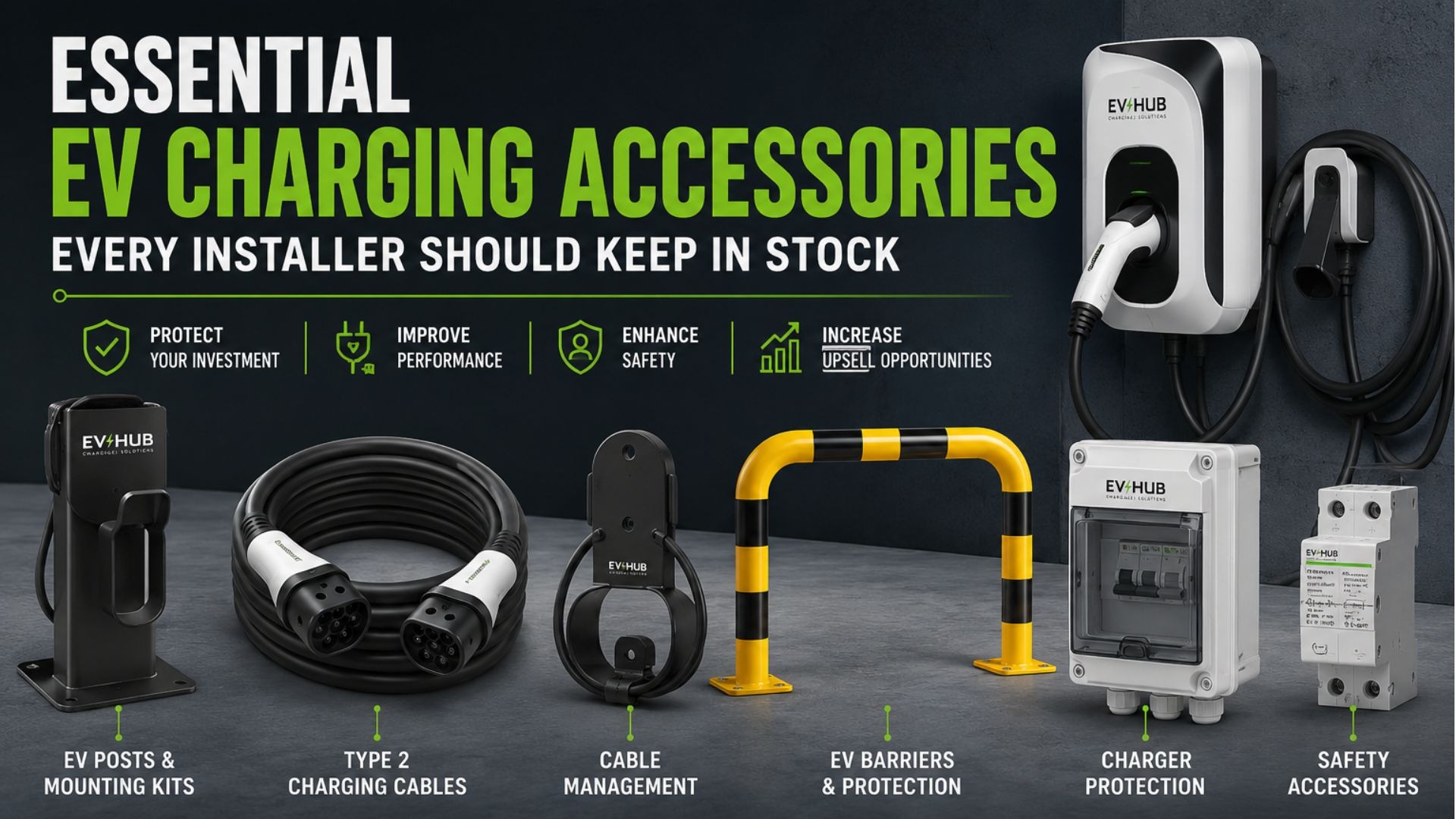
EV charger accessories can make the difference between a basic charging installation and a complete, professional solution. For installers, keeping the right accessories in stock can help reduce installation delays, improve the finished installation and create valuable opportunities to upsell customers. An EV charger is only one part of a complete charging setup. Depending on the property, parking arrangement and charger selected, an installation may also require cable management, EV barriers, charger protection, mounting kits, charging cables and other safety accessories.
For installers, this creates an important commercial opportunity. When customers are already investing in an EV charging installation, recommending the right accessories can add value while helping protect the charger and improve everyday usability. EV-Hub (Wholesale) Limited was created by experienced electrical installers who understand the practical needs of the trade. EV-Hub supplies EV chargers, EV posts, charging cables and installation essentials to contractors across the UK, supported by a Midlands-based trade shop and nationwide logistics network.
Why EV Charger Accessories Matter to Installers
A charger may be the main product on an installation, but accessories often complete the job. For example, a wall-mounted charger may need a suitable cable solution. A charger installed away from a building may need an EV post or mounting solution. A charge point positioned in a driveway or car park may also benefit from barrier protection. Therefore, accessories should not be treated as an afterthought.
For installers, having commonly required products readily available can also make project planning easier. Instead of returning to site because a required mounting or protection component was overlooked, the installer can specify the complete setup before installation begins. There is also a commercial benefit.
Customers may initially ask for an EV charger. However, once the installation requirements are explained, they may also need a charging cable, mounting post, protection or cable management solution. These additional products can increase the value of each installation while delivering a more complete solution to the customer.
The Essential EV Charger Accessories to Keep in Stock
Every installation is different. However, there are several accessory categories that installers should consider when planning their regular stock.
EV Charging Cables
Charging cables are one of the most useful accessories to keep available, particularly for socketed chargers. EV-Hub supplies Type 2 charging cables in different ratings and lengths. Its website highlights options including 16A and 32A cables, with lengths ranging from 5m to 10m.For installers, cable length is an important consideration. A short cable may be perfectly suitable for a charger positioned directly beside the parking space. However, a longer cable can be useful when the charger is mounted on a post, positioned away from the normal parking point or used with larger vehicles.
Keeping different cable lengths available gives installers more flexibility when quoting and completing installations. It also creates a straightforward upselling opportunity. If the standard configuration does not provide enough reach, a longer cable can be recommended as part of the complete installation rather than treated as a separate purchase later.
EV Posts and Mounting Solutions
Not every property has a suitable wall close to the vehicle. Detached driveways, shared parking areas, commercial locations and car parks may require a freestanding mounting solution. In these situations, an EV post can provide a practical way to position the charger securely. EV-Hub offers a range of EV posts and mounting solutions, including 1.2m and 1.5m options, along with ground mounting products. The website also lists products such as the EV Post “J” Hook Root Mount and EV Post / Pedestal Ground Mounting Base.
For installers, mounting solutions should be considered early in the quotation process. Ask where the customer parks, where the charger will be positioned and whether there is a suitable wall. If there is not, an EV post can be specified from the beginning. This avoids an installation being designed around a wall-mounted charger when the actual site requires a freestanding solution.
Cable Management
Cable management is another accessory category that can have a major impact on the finished installation. Charging cables need to be stored and positioned properly when they are not being used. A cable left across a driveway or walkway can become inconvenient and may create a trip hazard. EV-Hub’s charging cable guidance recommends keeping cables clean, avoiding sharp bends and using a cable holder or reel to keep the cable organised and off the ground.
For installers, cable management can therefore be presented as a practical addition rather than simply an optional extra. A well-managed cable can help keep the charging area tidy, make the charger easier to use and reduce unnecessary strain on the cable.
EV Barriers and Barrier Protection
Physical protection becomes particularly important when a charger or post is positioned where vehicles could accidentally make contact with it. Driveways and car parks can expose charging equipment to vehicle movements. In these locations, barrier protection can provide an additional layer of physical protection. EV-Hub currently lists EV Post Barrier Protection among its products. Its website also highlights barrier protection as part of the infrastructure supporting outdoor charging installations.
For installers, this is a strong product to discuss when assessing the installation environment. If the charger is positioned close to a parking bay, driveway entrance or vehicle manoeuvring area, explain the potential benefits of adding protection. Rather than waiting for the customer to ask about it, make barrier protection part of the site assessment and quotation process where appropriate.
Charger Protection
Charger protection is closely linked to the location of the installation. An outdoor charger can be exposed to everyday environmental conditions and, depending on its position, accidental physical impact. Selecting suitable mounting and protection products helps create a more robust installation. EV-Hub’s own installation guidance highlights the importance of protecting outdoor installations, including the use of barrier protection and tails protectors to reduce the risk of accidental damage.
Installers should consider protection based on the actual site rather than applying the same accessory package to every installation. A charger mounted on a protected wall may have different requirements from a charger installed on an exposed post in a busy parking area.
Tails Protectors and Electrical Protection Products
Some installations also require additional electrical protection products. EV-Hub (Wholesale) Limited lists products such as the GS9-12 12×40 TAILS PROTECTOR 2m, while its wider product range includes voltage monitoring and protection units such as the Matt SP-EVCP range.
These products should be selected according to the installation requirements, charger specifications and applicable electrical standards. For installers, the key point is simple: do not only consider the charger itself. Review the electrical installation as a complete system and identify any protection equipment required before arriving on site.
Ground Mounting Bases
Ground mounting products are particularly useful when the charger cannot be installed directly onto a suitable wall. EV-Hub lists an EV Post / Pedestal Ground Mounting Base as well as other mounting options. The correct mounting solution can help provide a stable and professional installation.
Groundworks should be considered during the initial site assessment. The installer needs to understand the surface, charger position, cable route and mounting requirements before selecting the appropriate product. This is another area where recommending the complete solution early can help prevent delays.
Quick Stocking Guide for EV Installers
The following table provides a practical starting point for building an accessory stock list.
| Accessory | Why Keep It in Stock | Best Upselling Opportunity |
| Type 2 charging cables | Useful for socketed chargers and different parking layouts | Offer longer cables where additional reach is required |
| EV posts | Provides a mounting solution where no suitable wall exists | Recommend for detached driveways and car parks |
| Ground mounting bases | Supports post and pedestal installations | Include with suitable freestanding installations |
| Cable management | Keeps cables organised and off the ground | Offer as part of a tidy, finished installation |
| EV barriers | Helps protect charging equipment from vehicle impact | Recommend in exposed parking areas |
| Tails protectors | Provides additional protection for relevant electrical installations | Include where the installation requires it |
| Protection units | Supports the electrical protection requirements of suitable installations | Discuss during the electrical assessment |
| Mounting accessories | Helps complete secure charger installation | Bundle with posts or charger installations |
Avoiding Common Accessory Mistakes
Even experienced installers can encounter delays when accessories are not considered early enough.
Choosing the Charger Before Assessing the Site
The charger should not be selected in isolation. The parking arrangement, electrical capacity and mounting location all influence the complete installation. EV-Hub recommends assessing electrical capacity and deciding between wall and post mounting as part of the installation planning process.
Forgetting the Charging Cable
Socketed chargers may require a separate charging cable. Before ordering, confirm whether the charger is tethered or socketed and whether the customer requires a separate Type 2 cable.
Ignoring Cable Length
A cable that is too short can make an otherwise good installation inconvenient. Measure the distance between the charger and the vehicle’s usual parking position before selecting the cable length.
Overlooking Physical Protection
A charger installed in a busy parking environment may face a greater risk of accidental impact than one positioned on a protected wall. Where appropriate, discuss EV barriers or other protection measures before completing the quotation.
Treating Mounting as an Afterthought
If a charger requires a post, the post and associated groundworks need to be considered from the beginning. EV-Hub’s installation guidance separates charger selection, groundworks and accessories as key stages of the buying process.
Why Buying EV Accessories From a Trade-Focused Wholesaler Makes Sense
Installers need more than a large product catalogue. They need dependable stock, practical product knowledge, competitive trade pricing and delivery that supports real installation schedules.
EV-Hub (Wholesale) Limited was founded by experienced electrical installers with a focus on supporting UK local installation contractors. The company operates a Midlands-based trade shop and a UK logistics network designed to support nationwide delivery.
The EV-Hub product range includes EV chargers, EV posts, EV charging leads, bundles and related installation products. Its website also provides installer-focused guidance covering charger selection, groundworks, cables and accessories. For installers, this means accessories can be sourced alongside the main charger rather than being treated as an entirely separate purchasing process.
Building a More Complete EV Installation
A professional EV installation is about more than connecting a charger. The finished solution needs to work with the customer’s vehicle, parking arrangement and property. It also needs to be practical for everyday use. That is why accessories deserve attention during the initial site assessment.
A Type 2 cable can improve flexibility for a socketed charger. A mounting post can solve the problem of a charger with no suitable wall nearby. Cable management can keep the installation tidy. An EV barrier can help protect equipment in a vulnerable location. Ground mounting and other installation accessories can help complete a secure and professional setup. For installers, these products also create opportunities to provide greater value without changing the core service being delivered.
Conclusion
Keeping the right EV charger accessories in stock helps installers deliver complete, practical and professional charging solutions. From Type 2 charging cables and cable management to EV posts, mounting kits, EV barriers and charger protection, the right accessories can improve every installation. They also create valuable upselling opportunities by meeting each customer’s specific needs.
Contact us today – EV-Hub (Wholesale) Limited for quality EV products, trade-focused support, product availability and trade enquiries. Our team is ready to help you find the right products for your next installation.